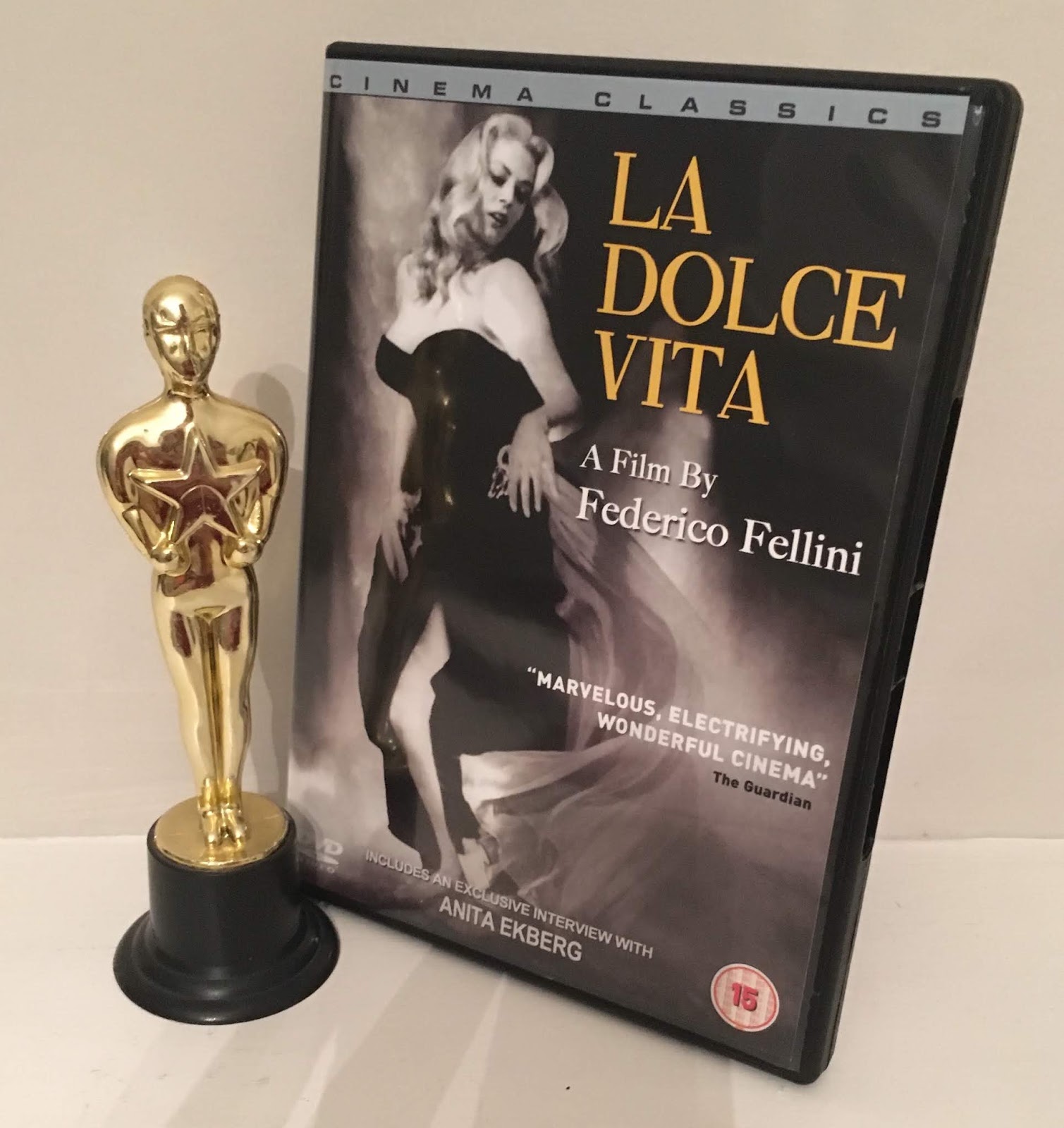
Wednesday, 1 August 2018

Foreign Language Film 3: Seven Samurai (1954, Japan)


As we have continued along this project, we’ve begun to notice that there aren’t any international films taking home the ‘Best Picture’ trophy. While we’re reviewing the main winners then, we’ve decided to recognise some of the most famous non-English speaking pieces every three weeks, continuing with the Japanese classic Seven Samurai.

Plot Intro


A peaceful village of farmers in late-16th century Japan find themselves under threat from a large group of bandits who want to ransack their food supply. Desperate and threatened by either starvation or slaughter, the villagers head to a nearby town in search of samurai who will protect them for food rather than money (which they don’t have). What they get is a team of seven Ronin (Samurai who have no masters), all of whom have their own backstories, secrets and inner demons. Will they protect the villagers, or die trying?


Paul says...


Director Akira Kurosawa helped put Japanese cinema on the map throughout the 1950s. Post-war Japan was in a period of rebirth, moving away from the atrocities committed by their military under the command of Emperor Hirohito, to become the progressive, democratic and economic powerhouse that it is today. Ideas of class were being questioned, with the Emperor himself becoming less powerful and more symbolic, and the peasant classes no longer being the oppressed masses but rather the backbone of the country’s economy.

And this is pretty much what Seven Samurai is all about. It is set in the late-16th century, another time when Japan was rife with civil war and social change, and whether the Emperor, the Shogun (the military dictator) or the people were in charge was in great contention. Many elements of the plot examine this: a group of peasants employing samurai without using money is emphasised as a controversial concept; the peasants are at first terrified of the powerful samurai who usually bully the lower classes, and it takes a while to build up trust; the young apprentice samurai, Katsushiro, attempts a relationship with a peasant girl which is even more shocking; the peasants fight alongside the samurai and do a majority of the killing; the samurai put up a flag which blends together symbols for the samurai and the village to represent their new-found unity; in other words, class boundaries are breaking down, and suddenly helping one’s fellow man for free becomes more important than complying with the rules of society. 

Besides being an effective examination of Japanese social structures, it’s also a rollicking good action tale. Elements of the acting appear mawkish and overwrought but the characters are well-drawn, most of which have their own motivations for helping the peasants and each have their own little or, sometimes, big stories to tell. The most engaging is Kikuchiyo, who is a farmer in disguise as a samurai searching for vengeance and is frequently haunted by memories of his own dark past. The action sequences are infamous. Action films of this era run the risk of seeming static and awkward in the 21st century, but Kurosawa filmed the fight scenes with multiple cameras in one go. The result is that he can flip between views rapidly, and he edits with a stimulating pace. 

Certain elements of the film have aged less well. When people die, it is blindingly obvious that they are just being tapped by the swords and arrows. Having grown up with Crouching Tiger, Hidden Dragon and Kill Bill, I am much more accustomed to seeing body parts scattering freely and fountains of blood to convey gruesome deaths. The budding romance between Katsushiro and the peasant girl is understandably controversial. The idea of a samurai loving a member of the poorer classes would be unthinkable. But to modern eyes, it’s not emotionally involving, and it suffers from the typically melodramatic '50s acting we’ve seen in From Here to Eternity and On the Waterfront. And at 3 hours 20 minutes, the film is too long. It’s nowhere near on the scale of, say, The Deer Hunter, which barely warranted half of its 3 hour running time. But a Rocky-style montage during the hour in which the villagers are being trained up could have kept the pace up and engaged us more with some of the minor characters.


Having said all this, this was a hugely influential film, with many modern directors using techniques and storylines that Kurosawa innovated. It was remade in 1960 as The Magnificent Seven with Yul Bryner and Steve McQueen, a highly successful western, and Pixar’s A Bug’s Life is based on both films too. Give yourself some breaks in viewing this, and you’ll find it’s a thrilling and intense experience.

Highlight
I loved the final battle in the rain. After so many fight scenes in a short space of time (and several deaths), you feel the exhaustion and knowledge that this is the make-or-break moment. I thought it was stunningly shot and Kurosawa used the weather so well.

Lowlight
The romantic storyline felt weak and outdated, and didn’t contribute much to the main storyline for me. I think it meant much more to a 1950s Japanese audience.

Mark
8/10


Doug says...

I’m going to say something surprising here. I think this film almost warrants its 3.5 hour running time. Oh yes, after my many rants on film length, this is a mere twenty minutes or so too long. Having said this, Pixar did the same film in 90 minutes with bugs instead of people so my point remains valid I feel. 

This is great. The first hour is probably the best, with the slow accumulation of samurai to the team allowing you to meet them individually and pick up different elements of each - one is an artist dedicated only to getting better at his craft, another is a friendly joker whose main role is to cheer up the team and keep spirits high. I found Kurosawa’s film-making engaging for the simple reason that the man focuses on plot. Oh yes, there are no long artistic monologues, there are no attempts at artistic metaphor. It’s a cracking story and the director knows it - so he tells it simply and we benefit for it. 

Like Paul I found myself engaged particularly in the adventures of farmer-turned-samurai Kikuchiyo (Toshiro Mifune) and the wise older leader Kambei (Takashi Shimura). The latter is a great presence throughout the film, acting with wisdom and solemnity, and I really enjoyed how they show his experience, including ‘war cabinet’ scenes where they sit outside and point at ink drawings on a piece of rice paper. Kikuchiyo is absorbing because his character is wildly frenetic and also at times affecting (especially a moment where he turns on the samurai, making them face how they often destroy the villagers’ lives) - and also because he's quite hot. 

I wasn’t looking forward to this film because I don’t like war films. But Kurosawa handles it brilliantly - we don’t have an hour of battle footage solid like other films, but he breaks it into battles, with other storylines surfacing in between individual battles. A countdown kept by Kambei of how many bandits have been killed - and how many are yet to go - ensures the watcher remains gripped. I actually enjoyed the battle scenes for once. 


This may have to do with - as Paul notes - how the villagers literally give a baddie a mild prod with a spear and said baddie falls over in ‘agony’ and promptly dies. This pantomimish feel actually lent the film an air of lightness which didn’t seem that bad. There are frequent light moments, the samurai are often joking and Shimura (as Kambei)’s face is almost always creased in amusement. It’s a kindly atmosphere and that pleasant felling ensures we enjoy spending time with these characters. 

Highlight 
I really enjoyed the first hour in particular, how each samurai is recruited is great storytelling and told with a lightness of touch that Western cinema often seems afraid to embrace. 

Lowlight
Like Paul, the love story seemed unnecessary and hasn’t dated well. Although I did enjoy the moment that Katsushiro asks the peasant girl-masquerading-as-a-boy (don’t ask) why a ‘boy’ would pick flowers and then surreptitiously drops the flowers that he’s been gathering himself. Vair droll.

Mark 

9.5/10 

Saturday, 21 July 2018

52. Kramer vs Kramer (1979)


Plot Intro

Ted (Dustin Hoffman) and Joanna Kramer (Meryl Streep) have been married for 8 years and have a 5-year-old Billy (Justin Henry). But one day, Joanna reveals that motherhood and house-wifeness is not working for her, so she leave career-focused Ted with Billy and disappears to California. Ted is forced to muster up whatever parenting skills he has to be both mother and father to Billy. But 18 months later, Joanna comes back, and she wants custody… 

Doug says...

We end the 1970s, and on my part it’s with a real sense of thankfulness. I’ve not enjoyed many of the films this decade, finding them lacking in humour, kindness or genuine, down-to-earth affection. So it’s with pleasure and not a little surprise that I found Kramer vs Kramer to be a deeply moving and tender portrait of a father’s struggle to keep his son. 

It’s the first time we’ve seen Dustin Hoffman since Midnight Cowboy, and I’m beginning to consider him one of my favourite actors. In this he plays Ted Kramer, a work-obsessed art designer who is instantly unlikeable as he brushes off wife Joanna (Meryl Streep)’s protestations that she’s leaving him as silly nonsense. 

It’s credit to Hoffman that Ted’s slow transformation from utter dickhead to caring father seems genuine and understandable. The film starts off with a slow telling of how Ted goes from not being able to make eggy bread to a gorgeous scene where he sets son Billy off on his first bike. As Billy cycles off, Ted cheers him on and then, a short pause later, yells ‘don’t go too far’. It’s very real and such a refreshing difference to the toxic ‘hard man’ masculinity that has pervaded much of the ‘70s films. (Although Hoffman remains problematic, as he often didn’t warn Streep of acting choices he’d made, such as throwing a wine glass above her head in a scene and slapping her for real. Method acting is often used as an excuse for being a dick). 

Meryl Streep makes her second appearance in as many years. Much like last week’s The Deer Hunter, she still feels like she’s cooking. It’s not the extraordinary talent that gets nominated at the Oscars every year these days - and I actually quite like that. This is Streep practicing and honing her craft, and while it means she’s not as magnetic here, it makes me value her work in modern films like The Hours and The Devil Wears Prada far more - it’s almost as if she had to grow older in order to truly become transformational. 

The film truly soars though once Joanna (having fled the house leaving Ted to raise Billy) returns a year and a half later to claim her son back. Ted, now having entirely reshuffled his life to make Billy his priority is angry. And the ensuing court scenes are electrifying in the way that they highlight how utterly unfair the courts can be in the case of custody hearings. We know that Ted is a wonderful father, but the courts use evidence from before to blacken his character, moments that even Joanna looks ashamed of in the court. 

It’s a film of quiet subtlety, and no more so than the scene where Ted tells Billy that Joanna is going to take care of him. It’s a gorgeous performance from Hoffman as he works to make sure Billy understands what’s happening without getting upset, and Justin Henry as Billy acts well beyond his years to match Hoffman. 


In the end, you’re left with a thoughtful, touching film that gives equal weight to both the mother and father roles in a child’s life. The divorce itself doesn’t even get shown - it’s all about the kid, and that’s refreshing in an era dominated by ‘hard’ uncaring characters. 

Highlight 
The court cases are tense and full of emotion as the lawyers twist truth to their own ends

Lowlight
The ending was a little convenient, even if it was the ending we wanted. Perhaps more of a compromise regarding Billy’s custody would have been more real. 

Mark 
8/10


Paul says...


Kramer Vs Kramer won big at the 1979 Oscars. As well as beating All That Jazz, Apocalypse Now and Norma Rae to the Best Picture trophy, it garnered Best Director, Best Actor for Hoffman and Best Supporting Actress for Streep (this was her second of 21 Oscar nominations, a phenomenal record-breaker, and first of three wins), along with acting nominations for Jane Alexander and Justin Henry, who is the youngest nominee ever at just 8 years old. And it’s easy to see why - this is an extremely touching, layered and engaging film about divorce, parenthood and the gender roles entwined in both of these themes. 

Surprisingly and refreshingly, the divorce is entirely centric around the husband. Ted starts off as a quasi-misogynistic, career-obsessed bread winner who doesn’t even know what grade his child is in at school. Joanna’s exit in the opening scene at first seems random but the audience, and Ted, gradually discover that she once had a career herself and now feels suffocated in a post-Female Eunuch world where more and more women are choosing to follow their own ambitions rather than what a patriarchal society expects of them. Through Dustin Hoffman’s incredibly real performance, we side with Ted, and support him in his realisation that he has mistreated Joanna and his atonement by being a great father to his oddly articulate son. It’s very sweet and I found myself heartbroken when his boss proves to be so bored and unsympathetic towards Ted’s new-found love of fatherhood, and I felt Ted’s desperation when he is fired and is scrabbling for a new job to pay lawyer’s fees.

Now here’s the most interesting bit. The film not only places the mother’s point of view as less important plot-wise, but as morally questionable. As I mentioned before, Germaine Greer’s The Female Eunuch was heavily in the public consciousness by 1979, and the '60s and '70s waves of feminism had given women a newfound power to create their own paths (and justly so). Joanna is evidently a product of this, but while she wants her career back, she also wants 18 months off from motherhood to “find herself” and then come back and gain majority custody rights. The second half of the film is dominated by the injustice that, although she abandoned her child and Ted has stepped up to the mark, the courts will likely rule in her favour because she is a mother. The film may be liberal in its assertion that fathers can, and should, take on the conventionally maternal role, but it is also conservative in its suggestion that Joanna wrongfully feels she has a right to everything. My interpretation is that the film is against women, and perhaps men too, who think they are entitled to a career, a therapeutic break from parenting, and the joys of child-rearing when actually the three are very difficult to mix successfully.

This assertion is uncomfortable to work with but pertinent even today. As an Early Years Teacher, it is still extremely rare for me to work with parents where the father stays at home and the mother works. In cases both professional and personal where divorce or separation has occurred, the children spend a majority of time with the mothers, either through court ruling or through the family’s choice which will inevitably be influenced by what society expects. For a divorced father to have sole custody of their child even now, the mother would have to be deceased, incapable of caring, or voluntarily given that custody, and courts will still favour her above a potentially better father. I may be touching on some very tricky opinions here, so please feel free to contradict me.  


Kramer Vs Kramer explores all this without becoming didactic or overly-sentimental and Hoffman steals it. It’s the closest I’ve come to crying since How Green Was My Valley, and it’s a welcome relief from the heavy-going machismo and darkness of the '70s. Most remarkably, it’s a 40-year-old film that remains relevant today, and that’s a great achievement in itself.

Highlight
The scene in which Ted works out why Joanna left him and explains it to Billy. It’s a beautiful monologue and it’s the moment when we begin to love and support Ted.

Lowlight
A few more jokes would have given an extra layer to the film, I suppose. As many a film-maker has proven, if you laugh with your characters, you’ll be all the more devastated when they fall.

Mark
10/10

Sunday, 15 July 2018

51. The Deer Hunter (1978)


Plot Intro
Three working-class men from Pennsylvania go and fight in the Vietnam War. They are Steven (John Savage), recently married, Nick (Christopher Walken) who is in love with Linda (Meryl Streep), and Michael (Robert de Niro) who also has eyes for Linda as well as a penchant for hunting deer. Needless to say, all three come back with various forms of physical and mental damage.

Paul says...

I have a slight advantage over Doug this week in that the two (yes, we have two) copies of The Deer Hunter on DVD did not have subtitles. Bearing in mind that sometimes I misheard lines or missed them completely, I can only imagine how arduous it must have been for someone who wears hearing aids to follow a darkly lit, 3-hour war film in which characters talk over each other with naturalism and semi-improvisation. So I’ll be writing this review with a firmer grasp of what was happening.

Having said that, I wouldn’t give The Deer Hunter any high marks. It has its merits- the main three actors plus Meryl Streep (for we have now entered The Age of Meryl) are extremely natural and tackle their roles with passion. You get a sense that they are friends behind camera and probably having quite a good time. The scenes in Vietnam are intense and briefly illustrate how gruelling this event was. But I think I will forever relegate The Deer Hunter to my list of “Films That Men Over A Certain Age Rave About”, along with The Godfather trilogy, Die Hard, and most things starring Harrison Ford.

My main issue is that the movie is far too focussed on showing these characters interacting like ordinary people, but with absolutely no backstory to any of them, or insight into the Vietnam War. The first hour is dominated by one wedding scene, but who are these men? Why are they going to war? How do they know each other? Why are some of them NOT going to war? These questions remain unanswered, and we’re expected to enjoy the machismo of these men because of their banterous shenanigans. The second hour focuses on their time as soldiers- but who are they fighting? Who are the Vietnamese and what were they fighting for? Again, no information is given. We’re are asked to assume that American soldiers were just there being tortured and killed by a nation who are obsessed with slapping faces and forcing people to play Russian Roulette. By the third hour, which covers the aftermath of these men’s lives, I’d switched off, and I looked up the plot on Wikipedia. 

So as you can see, for a film that frequently appears on Top 100 Movies lists, and is important in the war genre, you would expect a lot more depth. I can only imagine that, coming just 3 years after the Fall of Saigon and end of the Vietnam War, many of the questions left unanswered by The Deer Hunter’s writers would have been automatically answered in the heads of the audience who lived through these events. For ignorant millennials such as us, the political goings-on of the time remain obscure.

So no, I didn’t like The Deer Hunter. Not only because it’s slow, one-dimensional and so butch that you can just taste the testosterone (we’re supposed to like a group of men who liberally use the word “faggot” and shoot animals for a living), but also because it’s nowhere near as profound as it thinks it is. It’s racist, notoriously uninformed, and shows about as much knowledge about Vietnam as Love Island does about couples counselling. It was met with a great deal of controversy upon release for these reasons, with anti-war protestors stationed outside the very Oscars ceremony where it won Best Picture, which I think is quite justifiable. The icing on this ultra-American cake is the final shot, in which the cast sing a very patriotic song about how great the USA is, leaving a bitter taste in the mouth.


If you want a good film about people going to war with excitement and coming back with trauma, then two previous Best Picture winners, All Quiet On the Western Front and The Best Years of Our Lives, achieve this with far more skill.


Highlight
The Russian Roulette scenes are, indeed, very intense. It’s just a shame that there’s no evidence to suggest the Vietnamese people play this game as frequently as the writers seem to think. 

Lowlight
The final hour is such as drag. I suggest you buy a ticket to Miss Saigon instead.

Mark
2/10


Doug says...

Paul is right, this is a dull, offensive and ultimately pointless film. Yes, there were no subtitles and so I relied on him and Wikipedia to keep me updated as to what was happening, but ultimately there’s two major reasons as to why this is a dusty piece that should probably be left in the history archives. 

Number one: length. Yes, yet again I’m finding myself astonished at the sheer arrogance of directors who feel their story is worth expanding out to a ridiculous length purely (one assumes) for the ability to go ‘look, my film is three hours!’ To put it into context, the opening wedding scene which should have taken around ten minutes takes over forty five. It’s bizarre. 

Tautness is not a trait associated with ‘great’ films, which are allowed to ramble on and have about eight epilogues. And yet - I can’t help thinking about Hannah Gadsby’s Nanette  - a stand up routine available on Netflix in which she creates a groundbreaking narrative and ultimately creates a blazing piece of theatre. It’s an hour long. Also Pixar’s Coco - which deals with Alzheimers, age, death, family, fame and music - is an hour and a half. 

This film should have been an hour and a half. By the third hour I too was so disengaged that I spent most of it scrolling through Instagram and planning my itinerary for the week ahead. It is elongated and obtuse - and while audiences may have at the time understood the context differently (as Paul says), that is no reason for it becoming an ‘iconic’ film - if the context isn’t explained enough that millennials such as us can pick it up then the film becomes irrelevant. 

My second point is more of a personal bugbear: I hate ‘improvised’ theatre and film. I went to drama school, I’ve seen literally hundreds of plays, I’ve been exposed to more ‘improvised/devised/cast-created’ shows than most people have seen Disney films. And let me tell you - nine times out of ten, it does not work. You end up with overlong pieces tiptoeing around the core subject with actors desperately trying to grab more lines or ensure the spotlight is on them. The only time it does work is when there’s a director with a firm hand, using improvisations from rehearsal to then actively create a script - which everyone then sticks to. Caryl Churchill, Mike Leigh - these people are able to do that, whereas here so many scenes have been gratuitously allowed to run on while the actors murmur and burble their vaguely misogynistic/homophobic ‘banter’. 

And actually I haven’t even touched on the racism. Twenty years before this film, another war film was released that dealt with Asian culture (similarly the ‘enemy’ was a race stereotyped as cruel, Japanese instead of Vietnamese). That film was Bridge Over The River Kwai and yet they managed through the (far superior) film, to break through the ‘us’ and ‘them’, and actually show the humanity on both sides. Here we’re just subjected to a lot of Vietnamese people insisting everyone play Russian Roulette and then cheering as people blow their brains out. The actual existence of any Russian Roulette is uncertain, so the choice to feature it so heavily throughout the film - metaphor for war or not - is disingenuous and ultimately a low move. 


Oh Meryl, you can do better than this. 

Highlight
The Deerhunter theme tune is utterly beautiful, and is rightfully featured on many ‘Film Soundtrack’ compilations. Skip the film and just listen to it on Spotify. 

Lowlight
Pick your favourite. For me it has to be the overlong improvisational scenes full of a bunch of men muttering. So so dull. 

Mark
1/10 

Monday, 25 June 2018

Foreign Language Film 2: La Dolce Vita (Italy, 1960)


As we have continued along this project, we’ve begun to notice that there aren’t any international films taking home the ‘Best Picture’ trophy. While we’re reviewing the main winners then, we’ve decided to recognise some of the most famous non-English speaking pieces every three weeks, continuing with Federico Fellini's La Dolce Vita

Plot Intro


A journalist in Rome, Marcello (Marcello Mastroianni), embarks on a series of adventures whilst both trying to get some scandalous tabloid stories and trying to live “la dolce vita”, a life of comfort, decadence and carefreeness.


Doug says...


The word ‘masterpiece’ is thrown around a lot these days. I think I’ve even heard McDonalds use it to describe one of their new chicken nugget snacks. Hyperbole is everywhere and so we must strive to not overuse it. In cinema ‘masterpieces’ aren’t necessarily easy-going films, and they might not be films one chooses to watch repeatedly. But what they do do, to some respect, is break some ground, tell a story in a fresh way, and on some level access deeper meaning, or provide something that will inevitably stick in your brain. 

We watched Notting Hill last night, and while that was infinitely more enjoyable than La Dolce Vita, it is the latter film - 1960’s Italian piece on journalism, excess and love - that rightfully carries the title of ‘masterpiece’. It is an extraordinary film, unlike any that I have seen before, and (considering my previous rants about film length) carries its nearly three-hour length with ease. 

I think what this film is mainly about - although I could be wrong considering its murky plotting - is the new world of the ‘60s entering and changing the Italian landscape. It’s also about journalism - and how disturbing the papparazzi can be (at one point a new widow is surrounded by them, flashing cameras in her face while she is told the news that her husband is dead). We see countless scenes of revellers, bored wealthy people desperate to enjoy their lives with cabaret shows, attempted orgies and a seizing of anything that’s new - even if what’s new is just a giant fish washed up on the beach. 

There’s a tonne of symbolism to back me up here - the film opens with a statue of Jesus being flown over Rome by helicopter, swiftly followed by a bunch of reporters in their own helicopter - who hang out the doors and try to ask women out as they fly past. Religion is literally being shifted away by sex - and the pursuit of it. 

It’s also an incredibly sexual piece (hello 1960s Italy…), especially with the second ‘episode’, where Anita Ekberg as a rich film star dances in the streets. It’s an eroticism that American Hollywood shies away from, and it’s a credit to the film that we see no nudity, and yet the seedy, sexual nature of Marcello and Rome’s wider social circle still feels vibrantly put across and almost shocking in nature. 

But the real triumph of this film is how well it’s shot. Clearly Fellini knows what he’s doing, because every moment is captured beautifully on screen - no more than the penultimate scene when Marcello drunkenly rips feathers from a cushion and scatters them on top of party-goers. The light catches the feathers as they fall and covers the drunken, mewling partygoers with an essence of glamour that is ultimately as fragile as feathers themselves. 

It’s not a film where I felt I got many of the points - but unlike other pieces where the feeling of missing pertinent points is irritating, here it felt a simple evocation of how layered a piece it is. While it’s one for the film student, it also holds enough accessible detail that a casual viewer will still become entranced by the strange, dream-like events. At one point a rich American reveller pauses drunkenly in a door frame and mutters ‘for every biological test says octopi are oversexed.’ Bizarre but somehow enthralling - much like La Dolce Vita itself. 


Highlight 

The moment when Anita Ekberg dances in the streets before plunging into the Trevi Fountain is called iconic. For once, it’s a title well-deserved. She brings fire, energy and sensuality to just a fragment of the film, and yet is among its most memorable elements. 

Lowlight
Not a lowlight as such, but I did have to keep checking up on Wikipedia to find out what was really happening. However I can’t help but feel the murky uncertainty was something Fellini was deliberately trying to create. 

Mark 
10/10 


Paul says...


This film must have been a bit of an atom bomb in 1960 - and it was. The Best Picture winners of the '60s is fraught with ostensibly chaste musicals, with realism and modern society only coming in during the latter half of the decade. La Dolce Vita, this epic, multi-layered, daring film from the lethargic heat of Italy, provided a sensual, sexually-charged, immoral and sometimes voyeuristic alternative to, for example, The Sound of Music.

It’s essentially a film about burnt-out youths, who believed that post-war, post-Fascism Italy was to become a new land of hope and opportunity, with mass consumerism, travel, glamour, art and moral freedom finally making its way into this end of the Mediterranean. These youths, however, are now pushing 30 and 40, and have found that such a hedonistic lifestyle has led to conflict, exhaustion and a suicidal sense of nihilism. 

It is told through seven “episodes”, or so the critics claim. The critics have sometimes linked these episodes together to form seven consecutive nights within the film’s plot, and have also linked the seven episodes to other symbolic “sevens”, such as the seven sins and the seven sacraments. Whether this is the case or not would require a lot more critical research and analysis than a 500-word blog post can supply. However, it does ensure that various aspects of late-50s/early-60s Italian society are illustrated and explored in great depth. Religion, sex, celebrity, family, intellectualism, age vs youth, all the themes an English Literature student lives for are analysed here through these various sequences. 

As Doug points out, and I agree with this, it is beautifully shot with some captivating sequences. Anita Ekberg, who steals the movie even though she is only in the second episode, revels in music, dance and frolicking in a fountain in a very expensive-looking gown. I can see why the producers of Friends chose such an image for their opening titles. A circus-esque club/party that Marcello attends with his father; a stampede of panicking, superstitious Catholics; a group of friends listening to recorded sounds of nature rather than entering nature itself; all of these contribute to the sense that life in this supposedly “new” Italy is artificial, false and full of people having various breakdowns whilst being photographed by bouncing, over-excited paparazzi. As a journalist, Marcello represents the rest of society in that he has no desire to help those in need, he simply wants to watch and comment on them whilst he lives the “sweet life”, La Dolce Vita. Lana Del Ray probably loves this film.

It’s a fascinating movie, yes. But I’m not as enamoured of it as Doug for the fundamental reason that it’s probably an hour too long. By the time the sixth episode begins and we are in a very strange party in a castle where people chase each other sexually through various labyrinths, I felt like the point of the film had already been made. By the time the seventh episode comes around, the famous “orgy” scene, in which Marcello pretty much forces his friends to let go of all morals and go full on Bacchanal, I was done. This scene is so lengthy and overdone and I knew that, like all of the previous sequences, there would be no real conclusion, because the movie wants us to know that these characters’ situations are perpetual. It could have ended either an hour ago, or the pace could have been much quicker to whip through these set pieces.

Call me a philistine if you wish, but there’s only so much anti-hedonistic, inconclusive moaning that I can take. It’s a bit like listening to someone make a political point, but then go on to make the same point but in different ways over and over and over again. 

Highlight
Anita Ekberg’s sequence is worth watching as a stand-alone film. She’s fab.

Lowlight
The final “orgy” sequence that felt repetitive and drawn-out. 

Mark
5/10